
Runner info
What to expect during your adventure
So you’re interested in running an adventure relay, this relay in fact. You won’t regret it! You might have a moment during the event where you’re tired, sweaty, and trying to catch a moment’s rest inside a van, but you will push through it and find that you did something hard (but fun) and have forged memories with 11 other people. Are you game? Have you registered yet?
The basics of the PCR
First off, teams typically consist of 12 runners split into two groups of 6, each runner taking on 3 of the 36 legs of the 175 mile course. For example: Runner 1 will run legs 1, 13, and 25, runner 2 will tackle legs 2, 14, and 26, and so on. The cumulative distance for any single runner averages around 15 miles. Some people like to show off and/or punish themselves and run with a 6-person team, doubling their legs and mileage. We also give the option for wild-card teams where a team with less than 12 people can still participate, though they will not get an official course time.
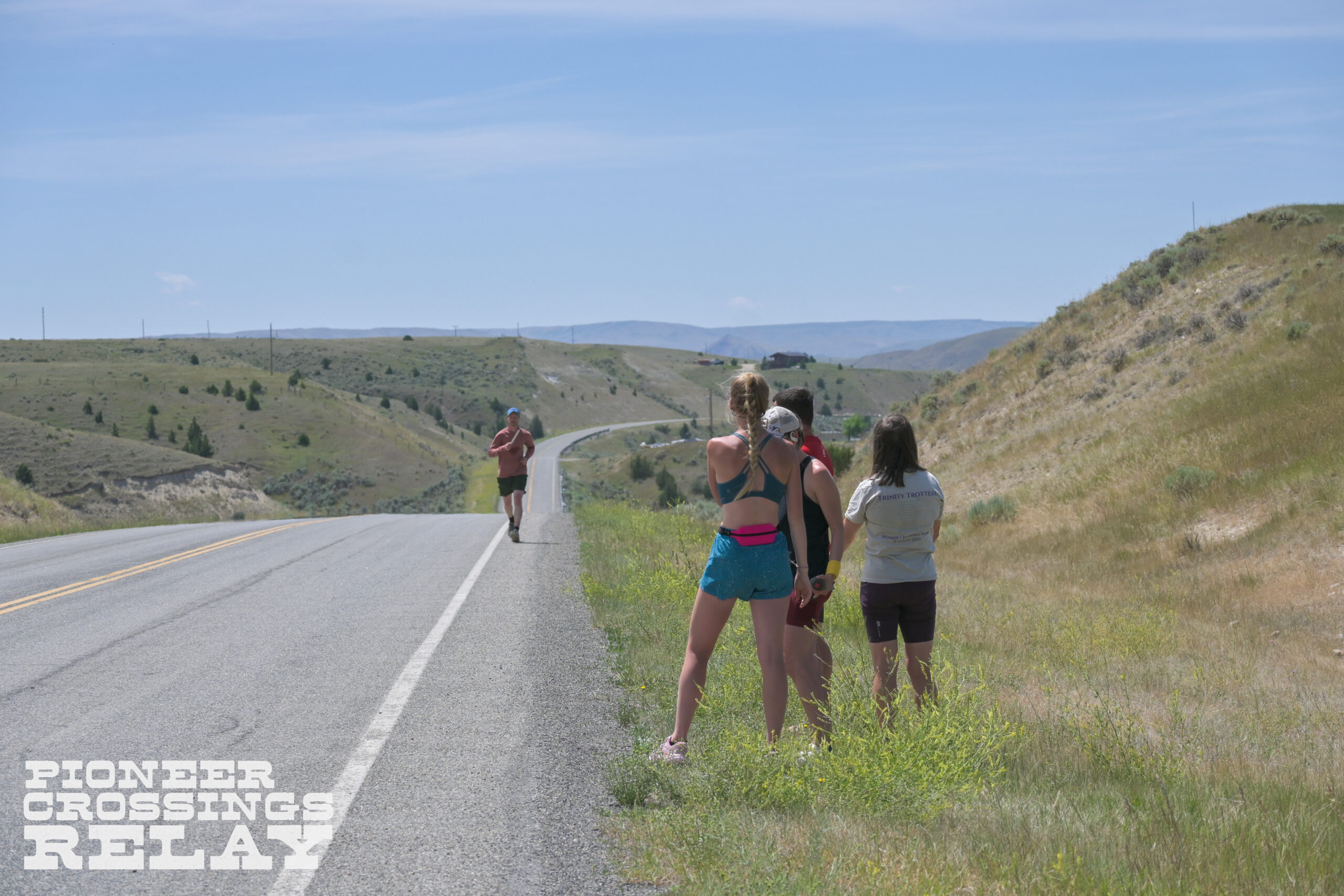
The Pioneer Crossings Relay is primarily a self-supported, continuous road race. This means that your team follows you along the course. This route is also not closed, so there will be traffic to watch for and cows to avoid. We will provide you with a safety briefing and have done what we can to ensure a safe journey from start to finish. This also means that you will spend a lot of time in a vehicle, so get cozy. The race does not pause at night. Runners will continue through the night (the stars are amazing!) and the whole event lasts 24-36 hours depending on your team’s pace.
If 15 miles doesn’t sound like quite enough fun, we also offer an Ultra and a Wild Card version of the race. The Ultra team consists of 6 runners averaging 29 miles each — well more than a marathon per runner, folks! The Wild Card team can have anywhere from 3 to 10 runners, offering a flexible option that lets recreational runners team up with ultra-distance runners, making it a great choice for groups with a mixed range of abilities and ambitions.
Part foot race, part grand tour
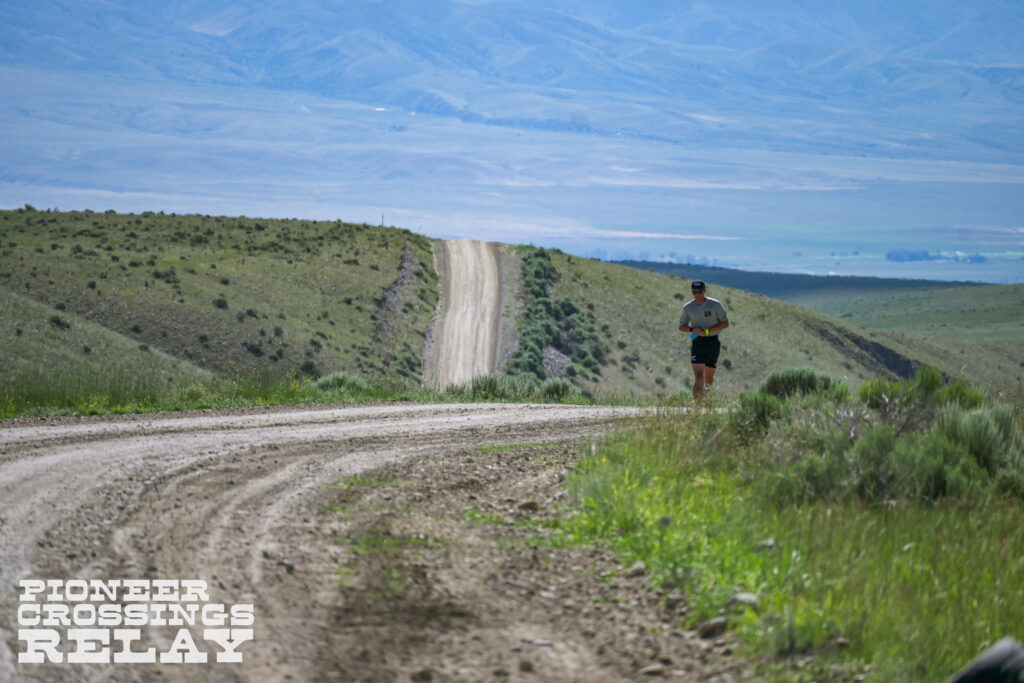
The course takes you through, mostly remote, scenic landscapes of SW Montana. The Pioneer Scenic Byway is often overlooked, but it is a premiere scenic route that, yes, goes over a mountain range. So lets talk a bit about your choices for ferrying your team across this grand route.
For teams of 12, you really should split into two vehicles. This allows half of the team to run up ahead to the start of their next legs (we call these van transitions) and allows for some rest and reduces the number of cars on the road. During the night legs, rest is crucial for those not running. We will have locations and opportunities for resting detailed in our final communications before the event. There can be some exceptions, but please, PLEASE, consider utilizing TWO 6+ passenger vehicles during your participation.
are you a team captain?
The road surfaces vary from asphalt, to gravel road, to dirt tracks. Most vehicles can safely traverse the course (sorry, your Ferrari might not have the clearance), but there are some sections that we ask that only the actively participating vehicle for those legs travel the road while the other part of the team takes and alternate route. Minivans and larger SUVs tend to be the best option.
Some teams drag a friend or loved one along to be their driver. This is fine, but they will have to sign a waver and attend the pre-race safety briefing in order to perform that role.
This seems hard, how fit should I be?
This is a bit subjective. Running is equal parts physical and mental fitness. You can’t merely look at a person and say “yeah, they’ll crush this!” or “there’s no way they’re making it to the finish line!” But a basic rule of thumb is one, can you run or jog a 10K, and two, can you do that 3 days in a row. Most people who run half-marathons (13.1 mi.) or greater distances should do fine. In fact, a half-marathon training program would probably be a decent way to go.
Pace, or how fast you run, is the biggest contributing factor to your team’s duration on the course. Study the course overview and you will see that some of the leg combinations are easier than others . A good team strategy is to give your slower-paced runners some of the easier legs, and let your stronger runners take the harder one. Runners 5 & 6 both have “easier” legs, but do note the elevation drop for runner 5, it wouldn’t be great for someone prone to knee issues.